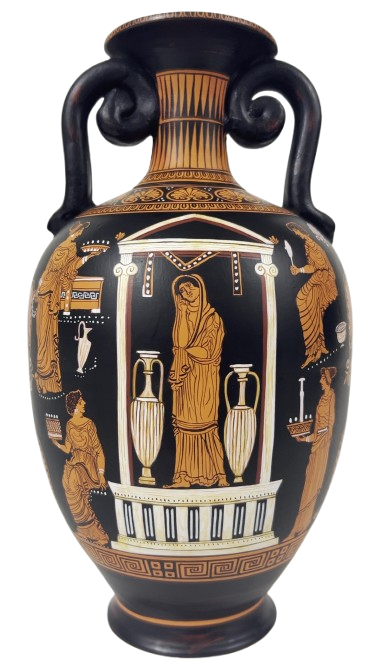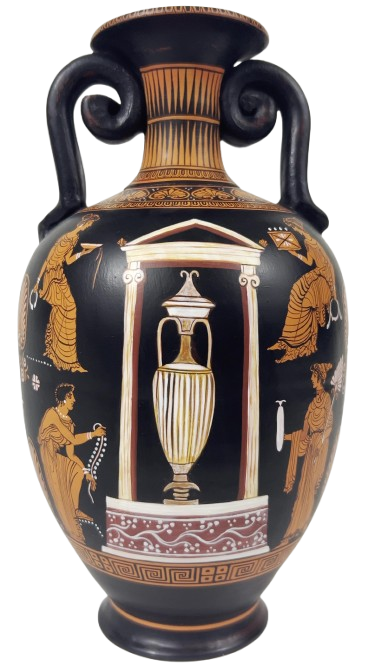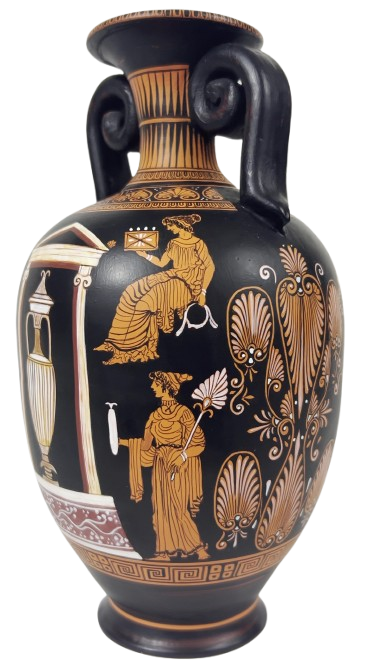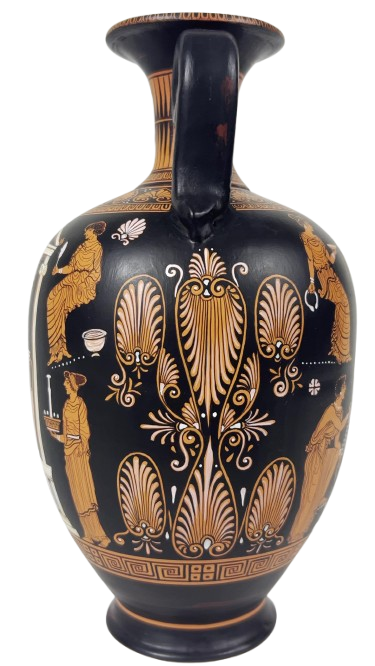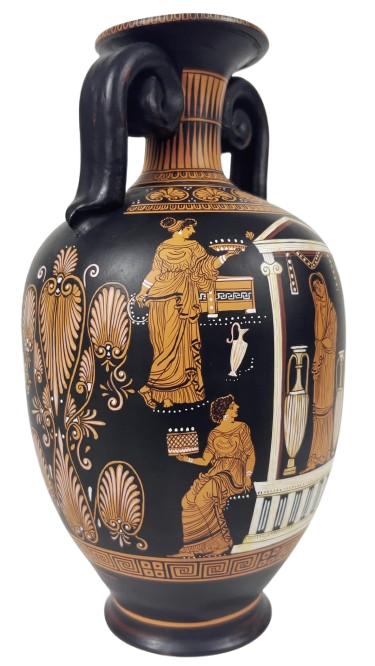
The Apulian red-figure neck amphora is dated to the 4th century BCE and belongs to the ceramic production of South Italy. It was found in the region of Apulia, a major center of Greek colonial activity and artistic expression during the Classical period. The vase is part of the collection of the Akademisches Kunstmuseum in Bonn, where it is currently on display.
This famous Apulian red-figure amphora, attributed to the Varrese Painter, depicts a dramatic mythological scene commonly identified as "The Mourning Niobe". The vase features extensive use of added colour, notably in white, yellow, and purple tones, used to highlight garments, jewelry, and attributes of the figures.
The neck of the amphora is decorated with fine linear patterns and palmette motifs. The body scenes are organized in two registers, possibly part of a naiskos composition. Female figures in rich garments express mourning or ritual lamentation, associated with the tragic myth of Niobe, who was punished by the gods for her hubris. The figures are rendered with elegant proportions and detailed accessories — such as fans, mirrors, lyres, alabastrons, and decorated baskets.
Inside a naiskos (shrine-like structure), a seated woman holds a mirror; others stand or sit in gestures of grief, surrounded by suspended objects and architectural elements. Ionic columns, architraves, and painted moldings further structure the space. The depiction of the Niobid scene here aligns with funerary themes common in late Classical Apulian vases, particularly those emphasizing heroization, mourning, and afterlife beliefs.
Though unsigned, the style and iconography closely relate to the Varrese Painter, a major figure in Apulian vase painting. The motif of "The Mourning Niobe" appears on several other vases by this painter, suggesting a thematic continuity in his workshop.