
Athenian Red-Figure Hydria. Museum's Replica at scale 1:2
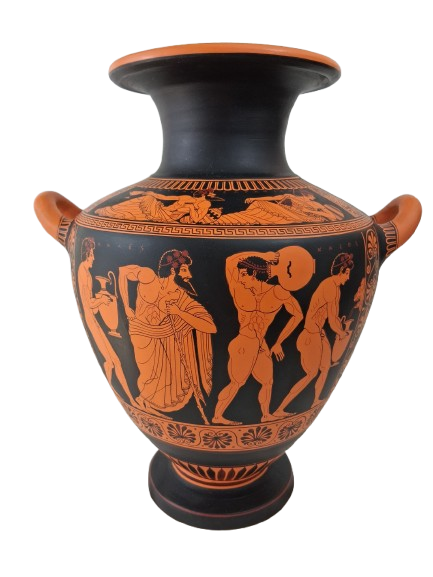
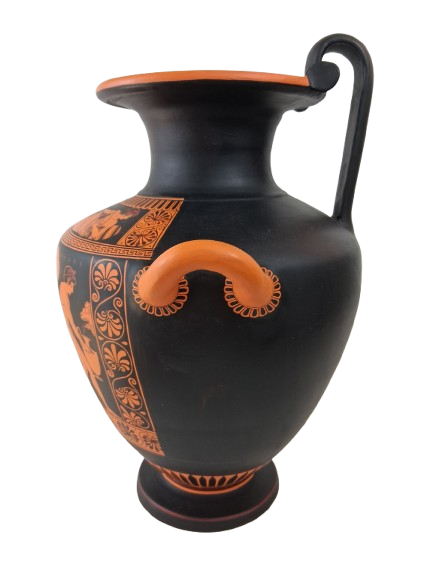
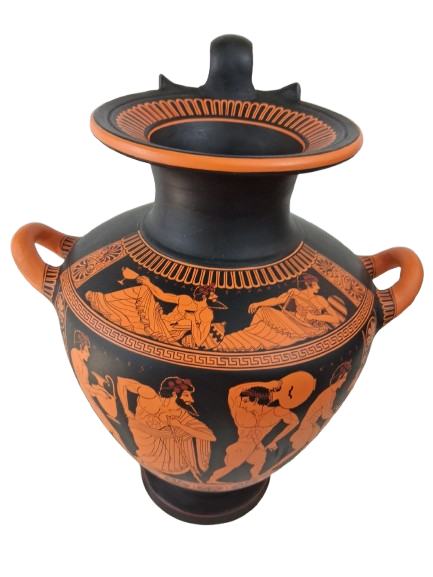
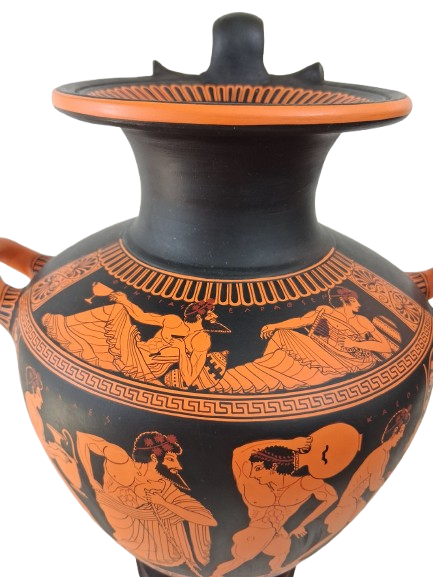
Athenian Red-Figure Hydria – Symposium & Hydrophoria
Date: circa 510 BC
Painter: Phintias (signed: Phintias egraphsen)
Findspot: Vulci, Etruria (Italy)
Collection: British Museum, London
Vessel Description
This is a red-figure hydria, signed by the renowned vase-painter Phintias, a member of the so-called Pioneers. The signature appears on the top part of the main scene: ΦΙ[Ν]ΤΙΑΣ ΕΓΡΑΦΣΕΝ. The vessel is currently held at the British Museum.
Real Dimensions Height: 53.34 cm
Main Scene (Body): Water-Carrying (Hydrophoria)
Three nude youths carry hydriae to a public fountain. On the right, a lion-head spout pours water into a hydria held by one youth. Another carries a hydria on his shoulder, turning back toward an older, bearded man leaning on a staff. The third walks while carrying a hydria with both hands. Only the central figure wears an olive wreath; the others wear vine wreaths. The inscription MEGAKLES KALOS celebrates the beauty of the youth.
Hydria Decoration
The vessels depicted bear dotted bands on neck, lip, and foot. The side handles are black-painted.
Secondary Scene (Shoulder): Symposium
Two vine-wreathed men recline facing right, each resting on striped cushions. The bearded figure holds two kylikes, one by the base and one by the handle; the other plucks a chelys lyre leaning against his torso. Both wear drapery around their legs. An inscription accompanies the scene, reinforcing the socio-erotic connotations.
Iconographic and Technical Details
Attention is given to anatomy and accessories: nails, garments, and inscriptions are precise; added white and red enhance the details. Eyes follow archaic conventions, and figures exhibit grace and movement.
Typology & Style
The hydria reflects themes of civic duty, training, and beauty (kalokagathia). It blends everyday and elite Athenian imagery. Phintias, a master of early red-figure, demonstrates balance, inscriptional clarity, and narrative subtlety.

