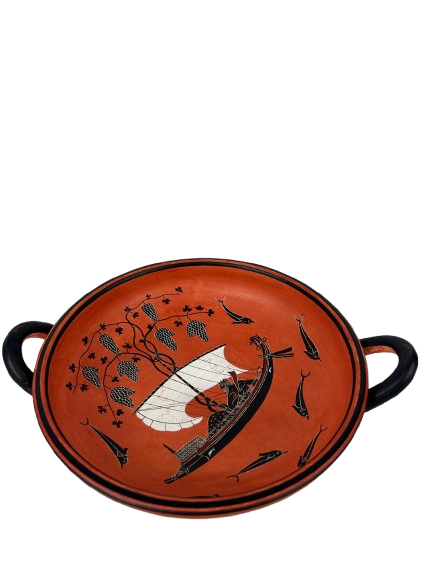
Athenian black-figure cup type A, painted using the coral red sub-technique, dated to ca. 575–525 BCE. The cup is attributed to Exekias and bears his signature: Exsekias epoesen, confirming its authorship by one of the greatest artists of the Archaic period.
The cup was found in Etruria, at the site of Vulci, a major Etruscan center for trade and recipient of Athenian ceramics. It is currently exhibited at the Staatliche Antikensammlungen in Munich.
In the interior (tondo), Dionysos reclines aboard a warship, surrounded by dolphins and a grapevine laden with bunches of grapes that miraculously grows from the mast. The image draws inspiration from the Homeric Hymn to Dionysus, where the god performs divine miracles to reveal his identity to pirates. The presence of dolphins and vines highlights the transformational and ecstatic nature of the god.
The exterior decoration features fighting warriors, a central nose motif between large apotropaic eyes, and fallen warriors beneath the handles. The intense gaze of the eye motif is thought to ward off evil during the symposium. The composition exhibits masterful drawing, narrative symbolism, and ritual purpose.