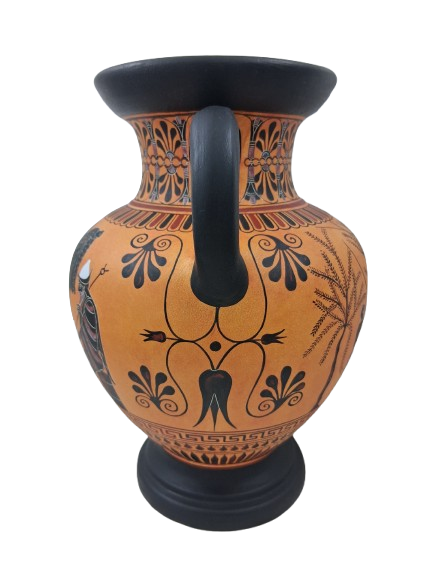
Athenian black-figure neck amphora, dated to approximately 550–500 BCE. It is attributed to the Antimenes Painter, a prominent artist of the black-figure style in the late Archaic period. The vase was discovered in Etruria, at Vulci, reflecting the widespread export of Attic pottery to Italy. Today, it belongs to the British Museum in London.
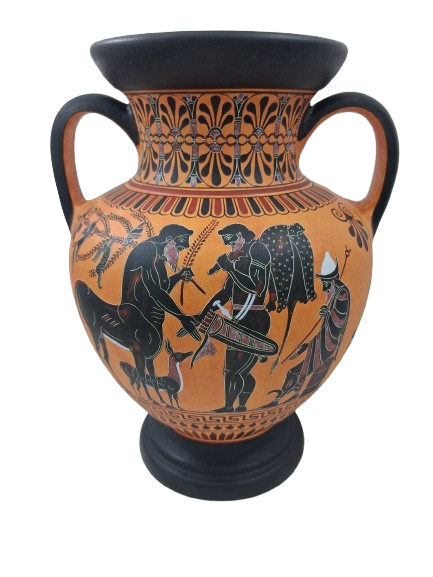
This amphora features two distinct narrative scenes rendered in the black-figure technique. On side A, the mythological meeting of Herakles and Pholos is depicted. Pholos approaches from the left, bearing a large bough over his shoulder from which a hare, a fox, and a bird hang. He offers his hand to Herakles, who stands opposite, dressed in a short tunic, with a sword, quiver, club, and the lion's skin. Behind Herakles sits Hermes, identified by his petasos, chlamys, and caduceus. A hind walks beside Pholos.
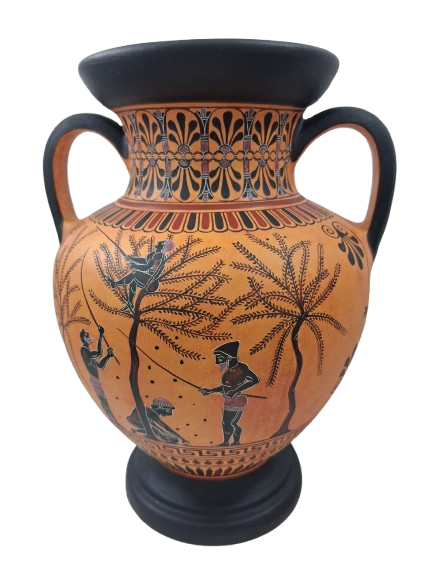
Side B shows a detailed olive-gathering scene, a rare subject in Attic vase painting. Three olive trees dominate the composition. A nude youth sits in the branches of the central tree, shaking it with a stick. Flanking him, two bearded men beat the trees with long rods, one wearing a pilos. At the base, another youth kneels, collecting the fallen olives into a basket. The scene is a valuable record of agricultural labour and seasonal activity in Classical Greece.